Bob Dole had a column in the Wichita Eagle promoting the privatization of social security. One of the most thoroughly dishonest and disgusting pieces ever written.
Shorter Bob Dole "Look at me channel FDR, er Alf Landon. Never could keep them straight. Democrats should follow the example of the great compromise of 1983 to enact a scheme that totally effectively wipes out the solution of the commission he is so proud to have been a member of. I propose a plan to save social security which actually worsens social security solvency. And, incidentally, in small print, ADD meaures to improve social security's solvency which means massive cuts in social security fro those younger than 55. But don't tell anybody that."
Friday, August 26, 2005
Bob Dole on Social Security


Monday, August 22, 2005
Wobblies
I recently bought Paul Buhle's Wobblies: A Graphic History of the Industrial Workers of the World. David Moberg gave it a nice review in In These Times.
I was intrigued by the idea of telling the story of the IWW using the tools of graphic novels. So I was looking forward to Wobblies. Now I have some doubts. The book captures the spirit of the IWW, but it may be seriously flawed as history.
I'm certainly not a labor historian, but I did catch a major howler. And I suspect that experts might find more.
In the story, "Mourn Not the Dead" by co-editor Nicole Schulman it is said that "34 members of the Kansas City IWW were kept in county jails for 2 years awaiting trial."
Actually, the IWWs were oil field workers in the Augusta and El Dorado areas near Wichita and they were held in inhumane conditions in the Sedgwick County jail. According to Earl Bruce White (in Joseph Conlin's At The Point of Production) government agents estimated that there were 2,000 wobblies in Kansas and Oklahoma in 1917.
The National Civil Liberties Bureau (forerunner of the ACLU) hired Winthrop Lane of Survey magazine to investigate Kansas's jails. When his story appeared, Judge Pollack found the jail unfit for prisoners and ordered the trial moved to Kansas City. They received harsh sentences.
And here's another problem. Schulman's text says "10 IWWs were locked inside 'a pie cut revolving drum' without windows....Most became ill. Many died of tuberculosis. Many more went insane." According to White, two of the defendants were judged insane and sent to the Kansas State Mental Health Hospital and were soon released. One defendant died of ifluenza in 1918.
The chief lawyer for the Wichita IWW defendants was Fred Moore, who later headed up the Sacco and Vanzettia defense. In this case he neglected to file a critical court document. This failure may have made him all the more willing, (eager?) to take on the case of the two Italian anarchists.
Also involved in this case, as well as other IWW cases, was Caroline Lowe, a SP activist who a few years later became staff lawyer for the UMW in southeastern Kansas.
Historian Ralph Luker notes that there are problems with an earlier Buhle book.
Recently, Ron Simon reviewed Paul Buhle and Dave Wagner's Hide in Plain Sight: The Hollywood Blacklistees in Film and Television, 1950-2002. In passing, Simon noted that the book was "often marred by historical inaccuracies." Books are often marred by inaccuracies, but the mere slap on the wrist infuriated one of Cineaste's readers.
Martin Brady" is the pseudonym of a Cineaste reader who brings the latest charges against Burle's scholarship. In a letter published in Cineaste (Summer 2004, 68-9), Brady refers to Buhle and Wagner as the "demented duo" and cites over five dozen major errors of fact. Evenhandedly, actors, authors, critics, directors, and producers are misidentified. There are errors of character, chronology, genre, and role. Buhle and Wagner reverse the roles played by Sean Connery and Richard Harris in The Molly Maguires.Harvey Klehr and John Earl Haynes have challenged Buhle's history on issues related to the Communist Party in an article in The New Criterion and in a book In Denial: Historians, Communism, and Espionage.
Thursday, August 11, 2005
Doug Ireland reports that
Worldwide protests have been called against the death penalty and criminalization of homophobia in Iran in the wake of the hanging of two teen boys in the Iranian city of Mashad. August 11 has been designated as the day for a series of coordinated demonstrations in France, Ireland, the United Kingdom, and elsewhere.

Ireland also invites us get involved
The French gay coalition has also endorsed the international petition entitled "No Gays to the Scaffold" organized by the French group Ensemble contre la peine de mort (Together Against the Death Penalty.) The petition says: "I hereby assert my solidarity and my support to homosexuals and other members of sexual minorities who are being arrested, imprisoned, and even sentenced to death and executed in the world. Iran, Saudi Arabia, Afghanistan, Mauritania, Sudan, Nigeria (northern states), Yemen, Pakistan, United Arab Emirates are the 9 countries where homosexuals risk death penalty the only motive being their homosexuality. This has to stop. Affirming and living freely one's sexual orientation is not a crime and should not have its place in the penal code. In the name of liberty and elementary human rights, valid to all women and men, I ask the international community to act with vigour so that the last countries still advocating for death penalty reform their penal code, and, in the meanwhile, commute the death penalty condemnations, and set free those arrested for the only reason them being homosexuals." There's an English-language sign-on page for the petition, so sign on by clicking here.I've added my name. I hope you'll do the same.
Did It Matter (Darfur)
Our weekly post from the Coalition for Darfur
Over a year ago, Eugene Oregon [co-founder of the CforD] wrote a post urging the Bush administration to declare the situation in Darfur a "genocide." Since then, an estimated 400,000 people have died, Doctors Without Borders is warning that millions of lives "hang in the balance," and the International Committee of the Red Cross is warning of "chronic instability."
One year later, we have to ask if the "genocide" declaration made any difference at all.
Monday, August 08, 2005
Unite Against Terror
I've signed this statement. I hope you'll read it and consider doing the same:
Terrorist attacks against Londoners on July 7th killed at least 54 people. The suicide bombers who struck in Netanya, Israel, on July 12 ended five lives, including two 16 year old girls. And on July 13, in Iraq, suicide bombers slaughtered 24 children. We stand in solidarity with all these strangers, hand holding hand, from London to Netanya to Baghdad: communities united against terror.
Sunday, August 07, 2005
Little Milton
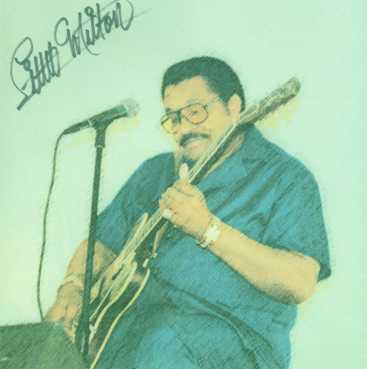
Little Milton Campbell died on Thursday. AllMusic.com's bio starts with this observation
He may not be a household name, but die-hard blues fans know Little Milton as a superb all-around electric bluesman -- a soulful singer, an evocative guitarist, an accomplished songwriter, and a skillful bandleader. He's often compared to the legendary B.B. King -- as well as Bobby "Blue" Bland -- for the way his signature style combines soul, blues, and R&B, a mixture that helped make him one of the biggest-selling bluesmen of the '60s (even if he's not as well-remembered as King). As time progressed, his music grew more and more orchestrated, with strings and horns galore. He maintained a steadily active recording career all the way from his 1953 debut on Sam Phillips' legendary Sun label, with his stunning longevity including notable stints at Chess (where he found his greatest commercial success), Stax, and Malaco.
Little Milton never really crossed-over to white audiences the way B. B. King, Albert King, Buddy Guy, and John Lee Hooker did. He remained a big draw with African-American audiences.
I heard Little Milton at the last or next to last KC Blues and Jazz Festival. In addition to concerts going simulataneously at three stages, the KC festival featured a blues school--performers giving an intimate performance and talk in the afternoon inside tents. I took some pictures. I then took a couple that I liked the most and made "artistic" with Corel's PhotoPaint program. A couple of years ago when Little Milton appeared at the Cotillion in Wichita, I went and had him autograph them.
One of them is the photo above.
Every time I heard Little Milton he gave an outstanding performance. He'll be missed.
Saturday, August 06, 2005
Witness
From the Coalition for Darfur
Two weeks ago, the Center for American Progress and the Genocide Intervention Fund launched a joint initiative known as "Be A Witness" built around a petition calling on television networks to increase their coverage of the genocide in Darfur.
As "Be a Witness" notedDuring June 2005, CNN, FOX News, NBC/MSNBC, ABC, and CBS ran 50 times as many stories about Michael Jackson and 12 times as many stories about Tom Cruise as they didabout the genocide in Darfur.This week, tireless Sudan advocate Nicholas Kristof took up the call and chastised the press for its lack of Darfur coverageIf only Michael Jackson's trial had been held in Darfur. Last month, CNN, Fox News,Shortly thereafter, Editor and Publisher printed a piece reporting
NBC, MSNBC, ABC and CBS collectively ran 55 times as many stories about Michael Jackson as they ran about genocide in Darfur.New York Times Columnist Nicholas Kristof's attack on the press for underreporting the atrocities and genocide in Darfur, which ran in today's paper, has drawn the ire of some newspaper editors who said they are doing the best they can with whatIn this piece, USA Today Foreign Editor James Cox offered a partial but important explanation for the dearth of coverage
they have.Cox pointed to a two-day series USA Today ran in May on Darfur, stressing the difficulty the paper had in even getting a visa for reporter Rick Hampson to travel there. "It was excruciatingly difficult to get the permission," he said. "We had anSudan does not want journalists freely traveling around Darfur for the sole reason that their reports are going to reveal the true nature of Khartoum's genocidal campaign.
application that had been stalled for months."
Considering this basic fact in conjunction with the efforts currently underway to expand the African Union mission in Darfur, it might behoove all involved to consider embedding journalists with the AU just as the US did during the initial weeks of the war in Iraq.
People want information about Darfur; journalists want access to Darfur; and the UN and AU want (or at least should want) to disseminate information regarding to crisis in Darfur as widely as possible.
The US and NATO are currently providing key logistical support to the AU mission and ought to insist that any reporter who wants access to Darfur be assigned to and granted protection by an AU patrol force.
Brian Steidle served with the AU in Darfur for six months before eventually resigning his position so that he could share his photos with the world.
Steidle is a hero for doing this - but it shouldn't take personal acts of sacrifice and courage to make the world aware of the genocide in Darfur.
Tuesday, July 12, 2005
Prayer for the Dying
Our weekly post from the Coalition for Darfur
As Mark Leon Goldberg of the American Prospect reported back in April, the Bush administration was leaning heavily on congressional leaders and managed to stall, and probably killed, the Darfur Accountability Act.
As Goldberg explained, the bill[E]stablishes targeted U.S. sanctions against the Sudanese regime, accelerates assistance to expand the size and mandate of the African Union mission in Darfur,expands the United Nations Mission in Sudan to include the protection of civilians in Darfur, establishes a no-fly zone over Darfur, and calls for a presidential envoy to Sudan.Because of this pressue, the bill appears to be trapped in the Senate Foreign Relations Committee and the House Subcommittee on Africa, Global Human Rights and International Relations, presumably never to be seen again.
So what is Congress going to do now that sanctions, a no-fly zone and civilian protection are off the table? Apparently it has been reduced to "[encouraging] the people of the United States [to pray] for an end to the genocide and crimes against humanity and for lasting peace in Darfur, Sudan."
That's right, the US Congress has been reduced to calling on the American people to pray that somehow this genocide ends.
On July 1st, the US Senate quietly passed S.RES.186A resolution affirming the importance of a national weekend of prayer for the victims of genocide and crimes against humanity in Darfur, Sudan, and expressing the sense of the Senate that July 15 through July 17, 2005, should be designated as a nationalThe House passed a companion resolution (H.RES.333) just yesterday.
weekend of prayer and reflection for the people of Darfur.
The key portion of the resolution reads as follows
Resolved, That the House of Representatives--
(1) supports the goals and ideals of a National Weekend of Prayer and Reflection for Darfur, Sudan;
(2) encourages the people of the United States to observe that weekend by praying for an end to the genocide and crimes against humanity and for lasting peace in Darfur, Sudan; and
(3) urges all churches, synagogues, mosques, and religious institutions in the United States to consider the issue of Darfur in their activities and to observe the National Weekend of Prayer and Reflection with appropriate activities and services.
This resolution appears to be the work of the SaveDarfur Coalition, a vital organization that has done a great deal to raise awareness of the genocide - but what does it say about the level of US commitment to address this situation when Congress is unwilling to do anything beyond simply asking the American people to pray for the dying people of Darfur?
If members of Congress are truly concerned about the deaths of nearly 400,000 Darfuris, or the fates of an estimated 3 million more, they are certainly capable of doing more than quietly declaring a "National Weekend of Prayer and Reflection."
Save Darfur deserves credit for getting Congress to even do this much, but this resolution cannot absolve Congress of its pathetic failure to adequately address the situation in Darfur. If anything, it only serves to highlight the government's utter lack of concern.
Happy Birthday: Woody
Woody Guthrie was born on July 14, 1912. To celebrate his life and music, the Eighth Annual Free Woody Guthrie festival will be held in his hometown of Okemah, Oklahoma from July 14-17. Although the musicians perform for free, a truly outstanding roster of regional and national acts are lined up to perform. Okemah is 70 miles east of Oklahoma City on I-40.
During his lifetime, Woody's left-wing politics made him damn unpopular in his home state. But since 2001 a Woody tune has been the official state folk song. (Oklahoma covers all bases with an official song, an official folk song, an official country and western song, and an official children's song.) It's not one of his political songs. "Oklahoma Hills" was actually a hit on the country charts back in the 1940s performed (and co-written) by Woody's cousin, Jack Guthrie, who was as All Music notes "one of the most important and influential country singers of the mid-'40s."
Some Woody Resources:
Library of Congress bioI'll be attending on Saturday and promise some photographs and a report.
Searchlight tribute (the leading UK anti-fascist, anti-racist group)
Official Woody Guthrie Homepage (WG Foundation, run by Woody's family it seems)
Booking Woody If you are interested in bringing a Woody Guthrie event to your school, library, organization, the Woody Guthrie Foundation has a bunch of exciting programs available.
UPDATE: Thanks to Jim Devine for catching my orignal and inexplicable substitution of the erroneous August for July when I posted this on Wednesday AM and a similar message on the LBO discussion list.
Thursday, July 07, 2005
Left Reactions to 7/7
Searchlight (the leading British anti-fascist, anti-racist magazine/movement)
No to fascist terror
Thursday 7 July 2005 will be a day that no decent resident of London or the UK will forget. Less than 24 hours after we were awarded the 2012 Olympics, a decision made partly because London is such a multicultural and tolerant city, the heart of our capital has been ripped apart by four bombs.It seems likely that the bombings were the responsibility of Islamist terrorists – religious fanatics who are nothing more than clerical fascists. They preach the politics of hatred and are indiscriminate in their targets. These cowardly bombings were an assault on innocent Londoners, Christian and Hindu, Muslim and Jew, black, brown and white going about their daily business.
Those who say they were responsible are using the language of European antisemitism when they talk of the "British Zionist Crusader government". They cite the wars in Afghanistan and Iraq as their motives but they are liars. They took the decision to bomb ordinary people in the city that held the world's biggest anti-war demonstration because of their own twisted hatred for democracy and for the idea that people of all cultures and faiths can live harmoniously together.
In this they are every bit as evil as the Nazis of the British National Party (BNP), an organisation that has also spawned terrorists. We should not forget that the last lethal terror bombing in London was carried out by David Copeland, a former member of the BNP. He told police on his arrest that he hoped his actions would lead to a violent backlash and eventually a BNP government.
The politics of Islamic fundamentalism are the politics of hate and intolerance. This is the other side of the coin to the BNP and other Nazi groups.
Only last year, a leading BNP officer said a terrorist bombing in London would be good for the BNP. That is not the talk of a respectable or even a normal political party.
As a result of today's detestable outrage, innocent Asians and people of the Muslim faith will be targeted by racists, fuelled with propaganda from the likes of the BNP.
London cannot tolerate pogroms and witch-hunts. We appeal to the trade union movement – members of the RMT, ASLEF, the FBU and UNISON have been directly affected by the attacks – to call, together with London mayor Ken Livingstone, for a mass rally as soon as possible at which all Londoners can express their disgust at terrorism and solidarity with their fellow citizens under the slogan "London stands together against terrorism and hatred".
Socialist International
Fausto Bertinotti, Chair of the European Left Party (ELP is mainly the old European Communist parties, minus most of what was the Italian Communist Party, which evolved into the Democrats of the Left)The Socialist International strongly condemns the indiscriminate acts of terror perpetrated today in London against innocent civilians who have become victims of criminal and cowardly terrorism.
We stand firm alongside the people of London who have reacted calmly and courageously in the face of these acts of barbarism, demonstrating that the values of freedom, tolerance and humanity shared by the citizens of London and all other cities of the world, cannot be destroyed, contrary to the designs of the criminals behind these attacks.The Socialist International expresses its heartfelt sympathy and condolences to all those who have been touched by these terrorist acts, and its full solidarity with the city of London, the people of the United Kingdom and the government of Prime Minister Tony Blair, leader of the British Labour Party.
We reiterate today our commitment, pursued collectively by our member parties in all regions of the world, to eliminate terrorism everywhere and bring to justice all those responsible for acts of terror, strengthening peace, democracy and respect for human rights.
"Once again violence is upsetting the world. Any place, any city, any country may become a stage for devastation and death. Women and men of any ethnic group, any age, any social condition are seeing their innocent lives destroyed. This is the atrocity of a barbarism. Today terrorism is upsetting London and the world. The spiral of war and terrorism is the terrifying background - both are the enemies of humanity. Last Saturday in Edinburgh a big white-clad march addressed poverty and war in peaceful and nonviolent language. Now the anti-war movement should become a key player in a worldwide mobilisation against terrorism and war. Only the people can stop this horrible violence."
The Alliance for Workers' Liberty condemns the bombings of the Underground and buses today (7 July) in London. The victims were a random selection from London's diverse population, many of them people on their way to work. The official toll as we make this statement is 37 dead and over 700 injured.
The al-Saha website has posted a statement in which "al-Qaeda in Europe" claims responsibility. "The time has come for the revenge [on the] crusading Zionist nation of Britain... a response to the massacres carried out by Britain in Iraq and Afghanistan... The heroic Mujahedeen carried out a blessed raid in London. Britain is now burning with fear, terror and fright..."
Such political Islamists have been terrorising and massacring socialists, trade unionists, feminists, democrats, and other people for many years in the countries where they are strongest. As socialists, we uphold the values of human life against this reactionary current.
We are against imperialism and against capitalism - but in the name of a democratic, socialist, human alternative, not in the name of a reactionary rage against the modern world.
We stand in solidarity with the victims of this sort of terrorism all across the world - and more especially with the labour and socialist movements at the front line of the struggle against political Islam, who work in the hardest conditions to mobilise the workers, the jobless, and the small farmers to stand up for their own rights and their own emancipation against both IMF-driven global capitalism and against the reactionary, anti-human ideologies that batten on the backlash against that global capitalism.
We pledge ourselves to redouble our solidarity with movements like the new trade unions and the Worker-communist Party in Iraq, the Labour Party of Pakistan, the FNPBI and other unions in Indonesia, and the Socialist Workers' Party of Algeria.
We call on the British labour movement to commit itself to solidarity with those movements.
It is the responsibility of the international labour movement to deal with the political-Islamist reactionaries, and it can only do that by developing its own independent politics, utterly hostile to all efforts by Tony Blair and his like to use the backlash against the terrorists to promote their own ends. The immediate effect of the atrocity will be to let Blair and Bush off the hook on debt, poverty, and climate change. The labour movement should resist that diversion.
We denounce any scapegoating of Muslim workers and youth, of the sort that was seen in some places after the 11 September 2001 attack in New York. We call on the labour movement to mobilise for physical defence wherever mosques or Muslim neighbourhoods are attacked by racists feeding on the backlash against the bombs.
We call on the labour movement to resist any attempt by Blair to use the backlash against the bombings to promote yet further attacks on civil liberties.
The attack came at the same time as London Underground is trying to cut station staff jobs. The Underground bosses should drop, right now, their attempt to pretend that the unions, in their defence of staffing levels, are exaggerating the tasks of safety and security on the Tube.
Political Islam is a political current; and the mass of people of Muslim religion or background are its prime victims and opponents. It is "anti-imperialist" only in a reactionary sense. Its hatred of US imperialism is no more progressive than fascists' hatred of Jewish finance-capitalists.
It has its own roots and its own logic, and cannot be dismissed as just the "bitter fruits" of evil US and British policies, any more than Nazism could be dismissed as just the "bitter fruits" of the US/ British/ French carve-up of the world after World War 1, requiring no special condemnation or opposition in its own right.
We condemn both political-Islamist terrorism and US and British imperialism. We stand in solidarity with the new labour movement and women's movement in Iraq, against both the US/ UK occupation and the political-Islamist or neo-Ba'thist "resistance" which inflicts on the people of Iraq's cities (especially, in recent months, the Shia people) the same horror inflicted on the people of London today.
Ken Livingston Labour Mayor of London
"This is not an attack against the rich and powerful. It is not an attack on the politicians, but on the common working people of London."We have seen that you are not afraid to take your own lives but what you did is just mass murder.
"I can tell you now that you will fail in your long-term objectives to destroy our free society."
Wednesday, July 06, 2005
Ideology in on the table
From Ian Millhiser at Think Progress
Conservatives Senators are tripping over themselves to claim ideology is off limits in questioning a Supreme Court nominee. History shows that’s not true.
In 1795, President George Washington nominated Justice John Rutledge to be Chief Justice of the United States. Rutledge, a former Associate Justice of the U.S. Supreme Court and current Chief Justice of South Carolina, was “well qualifed” by any standard, but Senate partisans blocked his nomination for one simple reason: ideology. Justice Rutledge opposed the Jay Treaty, a hot button issue in 1795. Because Senate Federalists couldn’t bear to see a Jay Treaty opponent on the Court, Rutledge’s nomination was rejected 14-10.
Unlike President Bush, President Washington respected the right of the Senate to reject judicial nominations. In 1789, Washington had even explained just how free the Senate was to do so: “Just as the President has a right to nominate without assigning reasons, so has the Senate a right to dissent without giving theirs.”
Tuesday, July 05, 2005
Welcome: House of Labor Blog at TPM Cafe
Josh Marshall's Talking Points Memo has been one of the most successful and influential blogs on the left side of the political spectrum. It's definitely on my check daily list. Recently, Marshall started another project The TPM Cafe,. The about page says
TPMCafe is a public meeting place to read about and discuss politics, culture and public life in the United States. The site hosts both blogs and public discussion areas.I hadn't really taken a look at the cafe. It's hard enough to keep up with the blogs that I've already grown fond of or found indispensible.
Well, now that's changed. At least one blog at the Cafe is going to be on my essential's list;
The first four entries are by Nathan Newman, Jo Ann Mort, Bill Fletcher, and Hans Reimer.
I've got a feeling I'll be linking a lot to THOL.
Monday, July 04, 2005
How to Fight the Court Battle
Words of wisdom from Nathan Newman:
The trap for progressives on the nominations fight for O'Connor's successor is just to talk about abortion and other social issues. We need to split social conservatives away from their corporate allies and highlight the rightwing ECONOMIC views of potential nominees.
The Supreme Court is the interpreter of legislative statutes and they can either enforce them strongly on behalf of the rights of middle class families or they can give corporations a free pass to loot pensions, poison the environment and violate their employees rights at work.
We need to wedge the opposition base and, even if some Bush supporters cheer an anti-choice nominee, we should raise questions with them about why that nominee also screws workers in all their legal decisions and never really punish corporations for their wrongdoing.
Yes, we need to mobilize our supporters but we also need to divide the opposition. Let's remind people that only a few of the Supreme Court decisions are about hot-button social issues.
Expand the debate and divide the opposition. That has to be our gameplan.
Sunday, July 03, 2005
Bluegrass Lyrics: Even More Interesting than Norm or Tim think
Norm Geras recommended an interesting post by Tim Newman close for its "close textual analysis, on a 'journey through the lyrics and origins of Appalachian bluegrass music'. " Norm even adopted a blog headline ("Six Coaches Long") from Tim's discussion of the lyric about a train which is "sixteen coaches long" which appears in several pre-bluegrass songs , including the Carter families "Worried Man Blues."
Tim has done a good job of tracking down lyrics, but he misses an important and intriguing story when he attributes "Mystery Train, " to Elvis Presley. Elvis did cut the most famous version of the song, but it was a cover of a record by Memphis bluesman Junior Parker.
A possible African-American source for the lyric is even older. According to the website of the Birthplace of Country Music Alliance
Leslie Riddle : This African-American guitarist and singer was a friend of the Carter family and was a frequent dinner guest in their home. He helped A. P. locate obscure songs, brought material from his repertoire to the A. P. Carter Family , and taught blues guitar styles to hugely influential guitarist Maybelle Carter.As Bill Malone and Elijah Wald stress in their recent books on country (Don't Get above Your Raisin: Country Music and the Southern Working Class ) and blues (Escaping the Delta: Robert Johnson and the Invention of the Blues) there was close interplay and interchange between white and black musicans.
And there's yet another twist in this story. While the Carter's are credited with being songcatchers who captured folk and traditional songs, some of the "folk songs" were actually the products of the Tin Pan Alleys of a generation or two previous. For instance, Wildwood Flower was "written in 1888 by Maud Irving and J.P. Weber, and popularized by the Carter Family.
And another twist, Wildwoodflower formed the musical basis for a song by Woody Guthrie, The Sinking of the Reuben James. Woody, of rourse, was close to the CPUSA and pretty much followed twists and turns of the party line.
And Tim Newman started his bluegrass lyrics post by
wondering if there can be any greater swing in sequential blog topics than that between Soviet symbols and hillbilly lyrics...
So, it seems the circle is unbroken.
The Spirit of 1776
Ian Williams has an interesting column at Salon.
The American Revolution was not about tea. It was about rum: the real spirit of 1776.Williams has also written a book "Rum: A Social and Sociable History of the Real Spirit of 1776" which is due in late August 2005 from Nation Books.
I am sure that given more space than a column in Salon, Williams will fully discuss the linkages between slavery and rum analyzed in the classic history by Eric Wiliams (no relation) Capitalism and Slavery.
Saturday, July 02, 2005
American Left Debates Iraq and the anti-war movement
Two American left journals, The Progressive and New Politics recently featured debates about the left, the antiwar movement, and Iraq.
In the June Progressive Erik K. Gustafson, the executive director of the Education for Peace in Iraq Center (EPIC), based in Washington, D.C. argues that "Abandonment of Iraq Is Wrong," while Norman Solomon executive director of the Institute for Public Accuracy says "US Out of Iraq Now.
The summer issue of New Politics has a wide-ranging symposium of reactions to three differing perspectives on Iraq in their Winter issue by Barry Finger, Wadood Hamad, and Glen Perusek.
Below are links to individual articles in the New Politics symposium and brief excerpts to give the tenor of the piece.
Anthony Arove editor of Iraq Under Siege: The Deadly Impact of Sanctions and War and a member of the editorial board of International Socialist Review.
It is especially important that the left should reject the racist and elitist idea that it is for us in the United States to decide the future of Iraq. Contra Hamad and Finger, it is not our job to dictate to the Iraqi people what form their resistance to occupation must take -- let alone to require that it be "rational," as Hamad suggests in language less from Hitchens than from Samuel Huntington, or that a movement facing the greatest military power in history must use "peaceable means" against its enemy.Barry Finger, a member of New Politics editorical board
...we must position ourselves toward that process of struggle which can develop a leadership able to mobilize the masses and attract international support in its resistance to the American occupation without sacrificing the Iraqi nation to the resurgent forces of jihadist fascism.
That is, we support an anti-imperialist movement that does not jeopardize the demands and just aspirations of the working class, of women and gays, of secularists, of national minorities and democrats to the cause of national salvation. We recognize that a nation "redeemed" by authoritarian movements, whether clerical or Baathist, would leave Iraq an empty shell; independent after a sense, but an Iraq whose independence in the absence of popular democratic participation would be a mockery of "self-determination" by any socialist standard. It is to the latent national leadership of these groupings of the oppressed that we counterpose both to the defeatist consciousness of those socialists-in-retreat who, reluctantly or zealously, look to imperialism to clear a path to democracy and to those slow learners and outright nitwits on the left for whom pleading the cause of "the armed resistance," however reactionary its social program and aspirations, is an adequate and sufficient political orientation.Wadood Hamad, research physicist, political theorist and activist, currently living in Vancouver, Canada.
Ignoring nuanced Iraqi politics and societal dynamics has shamelessly led segments of the left to cheer for a thuggish, reactionary insurgency set on a fruitless course to curtailing, and potentially halting, U.S. hegemonic policies. No crystal ball is needed to understand Iraq -- or indeed the Middle East, just a rational reading of history and a commitment to the inviolable sanctity of human life. Human beings, not machine guns, build progress. The rightist view of democracy as a commodity that can be exported using laissez-faire economics has infected those leftist segments in a serious way. It prompted them to ignore local (mal)development and the necessity to overhaul a highly corrupt regional power structure; and, in a naïve way, they have come to share the neocon's basic principle of ethnonationalist development.
Thus, elections in Iraq have been a mammoth achievement not because, but in spite, of U.S. desire. It was Sayyed Ali al-Sistani, the Shiite religious authority, who, over U.S. objections, was unwavering in his demand to their eventually taking place.Peter Hudis, a member of the editorial board of News and Letters
... that many today are "stuck between two inadequate visions" -- either apologizing for U.S. imperialist actions or "cheering any misguided ‘apparent' resistance to imperialism." Avoiding these false alternatives is not only needed to develop a successful antiwar movement; it is needed to ensure that the idea of freedom is not forsaken by today's radicals.
...the secular, democratic left in Iraq today is weak and marginalized. That is all the more reason for us to extend an active hand of solidarity with it. Even if it were true that pro-democratic leftists in Iraq lack a "mass base," we should do what we can to strengthen these forces, hammered as they are by the two terrorisms of the U.S. occupation and the fundamentalists.Letter from Tom Unterrainer, Nottingham England
The antiwar movement needs to make a turn from pure objection to the continued occupation -- a strategy that either explicitly or implicitly advocates "victory for the [reactionary] resistance" -- toward solidarity with democratic forces in Iraq. The question needs to be raised in trade union and labor organisations, in antiwar groups and in the wider press. In so doing, socialists will fulfil their obligations as internationalists and democrats and re-emphasise the centrality of the working class to our perspective. The fact that we have to carry this message into such movements is an indication of how far some have drifted from the ideas of socialism towards a reactionary anti- imperialism.Joanne Landy co-director of the Campaign for Peace and Democracy
Those of us who advocate immediate withdrawal of the United States and its dwindling number of allies from Iraq make a mistake, however, if we try to assure people that withdrawal will necessarily produce a positive outcome. It may be that the grotesque polarization fostered by the U.S. war and occupation has already succeeded in legitimizing and strengthening reactionary elements in the resistance to the point where they will be able to impose their retrograde agenda on the Iraqi people. But one thing is for sure: the longer the U.S. stays in Iraq the less likely a democratic, secular outcome for Iraq becomes. The only hope for democrats in Iraq is a speedy end to the brutal occupation of the country. And the only hope for democrats internationally is to break out of the terrible symbiotic relationship between the U.S. empire and the reactionary forces that feed off of its brutality, by opposing both of them.
The link to Glen Perusek's summer article ("Empire and Resistance") isn't working, so from his Winter contribution
The search for a secular left in Iraq today is to start off on the wrong foot. It would be better to recognize that all political tendencies are likely to bear an Islamic inscription, and that this fact alone scarcely commits them to any particular political outlook.
Socialists in the Marxist tradition have historically held that in conflicts between imperialist countries and colonies or quasi-colonies, the right to national self-determination is the prime concern.Staughton Lynd a veteran peace activist, historian, and labor lawyer.
We should demand immediate withdrawal of United States forces, the dismantling of all United States bases, and an end to all attempts by United States corporations to penetrate the Iraqi oil industry, without "endorsing" the Iraqi resistance.Stephen R. Shalom, a member of the New Politics editorial board
THE ANTIWAR MOVEMENT NEEDS to demand the immediate withdrawal of U.S. troops and an end to the U.S. domination of Iraq, not because we don't care about Iraqis, but precisely because we do care. And while we support any people's right to resistance, we should not "support the Iraq resistance."There is also a longer version of Shalom's essay, which has an interesting first two paragraphs.
A little over two years ago, anti-war demonstrations of unprecedented magnitude rocked the globe and the New York Times termed the anti-war movement "the world's second superpower." Unfortunately, no one could mistake the anti-war demonstrations that took place this spring for the "world's second superpower."It's good to see that Shalom acknowledges this. I'm not sure that Shalom that makes a convincing case, that is a case that would convince the liberal and left authors of A Matter of Principle: Humanitarian Arguments for War in Iraq.
On some level this fall-off from February 2003 was inevitable. Opposition to war then was a no-brainer, while the current occupation raises tough questions: now that the United States government has devastated Iraqi society, what should be done? Some of those who argue that the U.S. needs to stay in Iraq are unreconstructed imperialists, but some make this argument out of a genuine sense of concern for the Iraqi people. But however sincere they may be, those who take this position are wrong in their belief that the occupation can help Iraqis, and the anti-war movement needs to explain to them why this is so.
That's a dialogue that is insufficiently explored in the New Politics symposium. Still, I recommend reading both discussions.
The O'Conner Vacancy: What's at Stake
Via Daily Kos
This post from Ed Kilgore over at TPMCafe is getting a lot of online attention, because he pretty much pegs exactly the problem here -- for Democrats, for Republicans, and for Bush:
This appointment represents the giant balloon payment at the end of the mortgage the GOP signed with the Cultural Right at least 25 years ago. Social conservatives have agreed over and over again to missed payments, refinancings, and in their view, generous terms, but the balance is finally due, and if Bush doesn't pay up, they'll foreclose their entire alliance with the Republican Party.A few voices have bravely piped up, here and there, with the notion that Bush has an opportunity here to boost his legacy immeasurably with a moderate, centrist pick. It's admittedly true; he would probably get a major poll bounce, and start growing some non-existant coattails, if he chose a moderate conservative instead of a Gary Bauer, James Dobson approved one. But that's a pipe dream. Dobson owns Bush; we might as well start calling O'Connor's chair the Terri Schiavo Memorial Seat right now.
Weekly Darfur Post: Conflicting Priorities
From the Coalition for Darfur
For more than two years, the international community has done little to stop the violence in Darfur or provide security to the millions of displaced victims. And the closer one follows the world's response to this crisis, the clearer the conflicting priorities of the major actors (the US, the AU, the ICC and the UN) become.
Though former Secretary of State Colin Powell declared the situation "genocide" in September 2004, the United States has more or less ignored the Genocide Convention's legal requirement that parties to the convention "undertake to prevent and to punish" it. This can be partly explained by the fact that the administration played a key role in ending the decades long war in the South and does not want to risk upsetting it by directly confronting Khartoum over Darfur. It can also be partly explained by the fact that the CIA has developed significant ties to the regime in Khartoum, which has become "an indispensable part of CIA's counterterrorism strategy."
The International Criminal Court has just recently become involved in the conflict in Darfur, taking up an investigation and warning that Khartoum must cooperate with its investigation. The ICC is a relatively new body that has yet to try a case and is still working to establish itself as a viable international body. As such, the ICC is proceeding slowly and cautiously, attempting to stay within the bounds set by the ICC statute and avoid an embarrassing and potentially
damaging showdown with Khartoum should the genocidal regime refuse to cooperate.
The AU faces many of the same problems. As a relatively new organization, the AU hopes to become the key to providing "African solutions to African problems." Over the last six months, the AU hasonly been able to supply 2/3rd the number of troops it initially mandated and will, in all likelihood, be equally unable to fill the size of its expanded mandate. As a fledgling organization, the AU does not possess the clout or support necessary to demand an expanded
mandate to protect civilians in Darfur and has been reluctant to seek outside logistical or financial assistance for its mission, perhaps out of fear that doing so will highlight its inadequacies and undermine its credibility further.
While the US, ICC and AU all have a genuine interest in stopping the violence, it is clear that they also have internal concerns that are restricting their effectiveness in Darfur.
At the same time, the United Nations faces internal concerns of its own. The presence of Russia and China on the Security Council has stymied attempts to force Khartoum to reign in the Janjaweed militias and prevented the imposition of sanctions. Nonetheless, no amount of
internal concerns can excuse this recent statement by Jan Pronk, Kofi Annan's Special Representative to Sudan.
While Annan was telling Khartoum that the violence "must stop," Pronk was praising Khartoum for setting up meaningless show trials designed solely toslow the ICC investigationThe government says its national trials will be credible and will be a substitute for the ICC,which announced last week the formal launch of its investigation inFor two years, Khartoum has waged a genocidal campaign against the people of Darfur,
Darfur.
Pronk said those concerned about the credibility of the national
court, which begins proceedings on June 15, should give the government
the benefit of the doubt.
"If the government takes a decision to do something which it had been
asked to do late, you only have to criticise that they are late, you
should not criticise that they are doing it," he said. "So give the
government the benefit of the doubt."
taking the lives of an estimated 400,000 people. Under no circumstances does this government deserve "the benefit of the doubt."
Solving the crisis in Darfur is undoubtedly a priority for many in the international community. Unfortunately, it is not a main priority. And because of that, it is likely that tens of thousands Africans will continue to die over the coming months.
Monday, June 27, 2005
Remembering James Weinstein
I never met James Weinstein, but I certainly felt his influence. Doug Ireland has a long and very worthwhile tribute on his blog which is sort of a capsule history of the American left over the last century. You should read it all. And, if it makes sense, check out Weinstein's The Long Detour and subscribe to In These Times, the news bi-weekly Weinstein founded.
Here are a few highlights from Ireland's tribute
James Weinstein -- author, historian, teacher, editor, publisher, founder of In These Times magazine, and an important figure in the life of the mind of American radicalism for four decades -- died Thursday morning at his home on the North Side of Chicago, after a long bout with brain cancer. On his death, Rep. Bernie Sanders of Vermont -- the Independent member of Congress who is a democratic sociast -- told the AP, ""Jim Weinstein was one of the intellectual leaders of the American progressive movement."Jimmy Weinstein was the son of privilege, but he always put his inherited wealth at the service of his lifelong radical ideals. A New York City native, he was politically active in left-wing causes from the age of 14, and -- after leaving his undergraduate studies at Cornell in 1944 to serve 19 months in the Navy as World War II came to a close -- he returned to finish taking his degree, then went on to graduate school at Columbia University, where he joined the Communist Party. Jimmy broke with the CP in 1956 after the Soviet invasion of Hungary (left)-- and later, as a historian, Jimmy became one of the Communist Party's most intelligent and perceptive critics...
Jimmy wrote five books -- among the most significant, to me, is his The Decline of Socialism in America, 1912-1925, which belongs on the bookshelf of anyone truly interested in the history of the American left...
Jimmy helped keep alive a history that has almost disappeared from the American consciousness. In the years immediately preceding the First World War, the socialist movement laid down deep roots in the Images_13 United States, in spite of many obstacles. Jimmy Weinstein's brilliant study of the Socialist Party altered many of the prevailing assumptions about American radicalism, showing that at its numerical peak in 1912, the party had 118,000 members well distributed throughout the country. It claimed 323 English and foreign-language publications with a total circulation probably in excess of two million. The largest of the socialist newspapers, The Debs Appeal to Reason of Girard, Kansas, had a weekly circulation of 761,747. In 1912, the year the party's leader, Eugene V. Debs (left) polled 6 percent of the Presidential vote, Socialists held 1,200 offices in 340 cities, including 79 mayors in 24 states. As late as 1918, they elected 32 state legislators. In 1916, they elected Meyer London to Congress and made important gains in the municipal elections of several large cities.
Among many points made in his writings -- both in his books, and in scholarly articles -- Weinstein argued coherently that the Communist Party U.S.A. helped squander that rich legacy of native American radicalism by its slavish devotion and subservience to Soviet Russia -- which was utterly irrelevant to the needs and experience of working-class America.
The largest constituency in Israel's Labor Party...
Hint, it's not the kibbutz movement
From the National Committee for Labor Israel
A column (off-line) in the Sept-Oct issue of Jewish Currents discussed polling done by Professor Sammy Smooha provides some background for this surprising development.For the first time in the history of the Labor Party, Arab members have become its largest constituency.
According to membership poll data the Arab constituency is approximately 22 percent of the Party’s members, while the rate of kibbutz members, traditionally a prominent Labor constituency, dropped from 16 to 10 percent. This shift is expected to have a crucial influence on the party's primaries.
The dramatic increase in the Arab constituency could benefit chairmanship candidate Benjamin Ben-Eliezer, who drew 14,000 Arab members to participate in the census. Matan Vilnai and former Prime Minister Ehud Barak, also candidates for the Party’s top position, are likely to suffer from the diminishing constituency of kibbutz members, their major support group.
According to the new party census, some 21,500 Arabs signed up as members, compared with some 14,600 in 2002 who were then approximately 13 percent of the total. This reflects a sharp rise of 47 percent in Arab members.
This was probably the result of massive efforts by Ben-Eliezer and Histadrut chief Amir Peretz, also a chairmanship candidate, to sign up Arab members. At the same time the constituency of the kibbutz sector diminished significantly. So far, fewer than 10,000 members signed, compared with 17,629 in 2002, when they formed approximately 16 percent of the total number of party members.
there has actually been a considerable moderation of "militant stands" in the Arab population over time. In the current study, a total of only 3.1 percent of Arabs supported violence, as opposed to 17.9 percent in 1976 (8 percent in 1988, 5.4 percent in 2002). A total of 54.9 percent said they feel closer to Palestinians in the West Bank and Gaza, while 45.1 percent /" said they feel closer to Jews in Israel; in 2002, these numbers were 70 and 30 percent, respectively. In 1985, 47.1 percent responded that they were anti-Zionist. Now this statistic stands at 20 percent, with 78.8 percent responding that they are non-Zionists.There is, of course, still much work that must be done to achieve political, economic and social equality for Israel's Arab citizens, but isn't it way past time that the libel of Israel being an apartheid state is rejected as wingnuttery if not an expression of outright bigotry.
According to the latest index, 90 percent of Arab citizens now recognize Israel's right to exist, and most want to be integrated into Israeli society; 67.5 percent would be willing to live in a Jewish neighborhood, and 80 percent would like to enjoy parks and share swimming pools with Jews. Only 13.4 percent would be willing to move to a Palestinian state. Almost 75 percent support the return of Palestinian refugees only to the territories, and 65.2 percent agree with the statement, "despite its disadvantages, the government of Israel is democratic also toward its Arab citizens."
Subscribe to:
Posts (Atom)

